How to Stand Out as a Tradesperson and Land the Right Role
In technical trades, the people who land and keep the best roles are not always the most skilled on paper. They are the ones who get the basics right. That was a recurring theme when TRS Resourcing Managing Director Tavis Shearer spoke on the Earthworks Hub podcast, drawing on 27 years in recruitment. For…
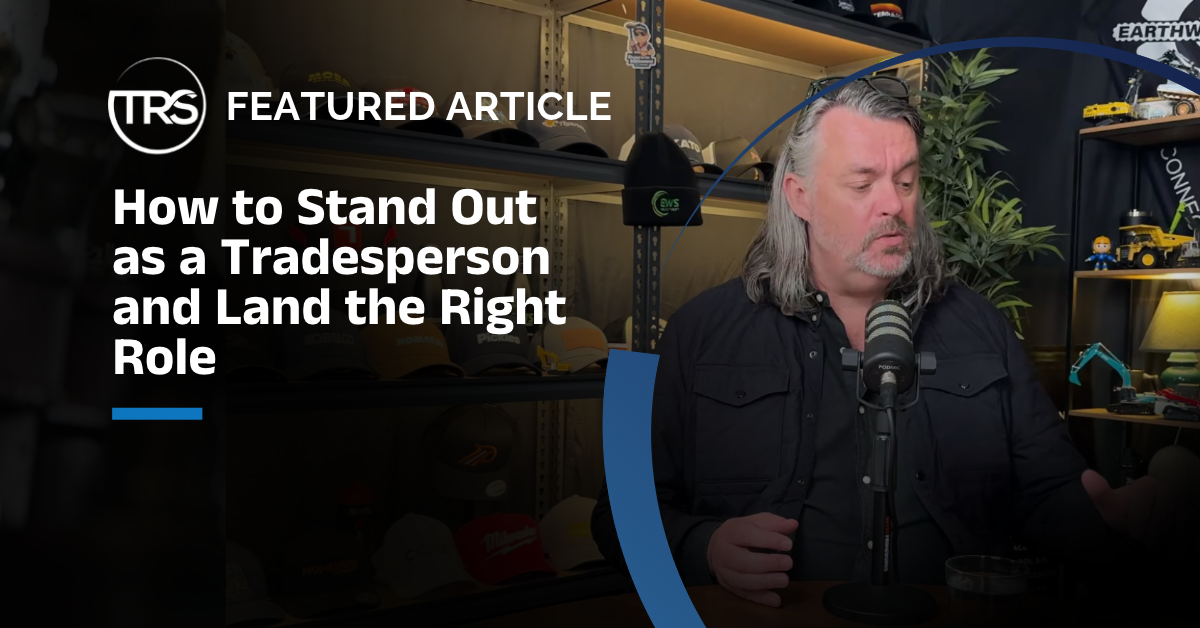
In technical trades, the people who land and keep the best roles are not always the most skilled on paper. They are the ones who get the basics right. That was a recurring theme when TRS Resourcing Managing Director Tavis Shearer spoke on the Earthworks Hub podcast, drawing on 27 years in recruitment. For tradespeople across NSW, VIC, QLD and WA weighing up a move, understanding what employers really look for, and how to spot a good one, is often the difference between a step up and a step sideways.
Here is what Tavis Shearer shared about standing out as a candidate, reading an employer before you commit, and protecting your reputation in a small industry.
Employers judge behaviour before skills
Tavis Shearer says he can usually tell within a couple of minutes of talking to someone whether he would put them forward, and it has little to do with their ticket. It comes down to patterns of behaviour. Does a candidate call back when they say they will? Do they turn up to an interview on time, or turn up late but let you know? Do they return documents quickly, or do you chase them?
The reasoning is simple. If someone cannot get the basics together at the start, when they are trying to make a good impression, an employer assumes it will not improve once they are on the books. Reliability and communication are read as a preview of how the person will work. For candidates, that is good news: a lot of standing out is within your control and costs nothing.
How you leave matters as much as how you arrive
One piece of advice Tavis Shearer gives every candidate is to never speak badly about a current or former employer, in an interview or anywhere else. If a candidate runs down their last boss, the person across the table quietly wonders what will be said about them later.
How you exit a job says a lot about how you will start the next one. The trades are a small world, and reputations travel. Tavis Shearer tells the story of a site manager he dealt with early in his career who, years later, turned up as a construction manager at a major business and remembered him. The plant operator you fall out with today can be a manager at a tier-one contractor in a few years. Leaving well, working out your notice and keeping the relationship intact, protects opportunities you cannot yet see.
Reading an employer before you commit
A move is only a good one if the employer is. Tavis Shearer hears the same red flags again and again from candidates who come to TRS looking for work. A pay rise that was promised and never arrived. Training that was advertised and never delivered. Career progression offered by a business with nowhere to progress anyone. Sloppy onboarding, where nothing was ready on day one, is another warning sign, as is an employer who talks up safety at interview but runs the opposite way on site.
His caution cuts the other way too. It is easy to talk yourself into a role when an interviewer says a few things you want to hear, and to wave away the parts that did not sit right. The grass is not always greener. Tavis Shearer sees candidates leave, join a new employer, and call back within weeks wanting to return. Asking clear questions up front, and listening to the answers, beats finding out the hard way.
Your reputation and online presence
Candidates talk to each other, and so do employers. Tavis Shearer notes that how a tradesperson deals with people, their online reviews and their social media all feed into the impression a business forms before an interview is even offered. For any significant role, he says, assume the employer will look at your socials.
That is not a reason to scrub everything, but it is a reason to be aware of the story your public profile tells. If a feed is wall-to-wall big nights out, an employer starts wondering about reliability on a Monday. The flip side is an opportunity: a profile that shows pride in your work and the jobs you have done can help make the case for you.
How to stand out and get the right role
Beyond behaviour, Tavis Shearer points to the habits that separate the operators businesses fight to keep. Looking after your equipment is a big one. He has long found that the best operators are the ones who care for the machines they run, and employers notice. Being responsive, communicating clearly and following through on what you say all carry weight.
Before accepting a role, get specific. Ask what machine you will be operating, what the hours are, whether there is interstate travel, and what the pay and conditions really are. A good employer will have clear answers, and the clarity protects you from starting a job that turns out to be something else.
Career tips for tradespeople
- Return calls and messages promptly, and let people know if you are running late. Behaviour is assessed from the first contact.
- Never badmouth a current or former employer; the industry is small and reputations travel.
- Leave well. Work out your notice and keep relationships intact for the future.
- Watch for red flags: unkept promises, poor onboarding, late pay and safety talk that does not match the site.
- Assume employers will check your socials, and make sure your public profile reflects your work.
- Look after your equipment and communicate clearly; these are the habits employers keep people for.
- Before you accept, confirm the machine, hours, travel, pay and conditions in writing.
Related reading
- Get hired faster in the trades: what sets you apart
- Diesel mechanic jobs: why your CV still matters
- Diesel mechanic pay rates: why offers are missing the mark
Frequently Asked Questions
What do employers look for when hiring tradespeople?
Beyond the right ticket, employers look for behaviour: returning calls, turning up on time, communicating when something changes, and following through. Reliability and clear communication are read as a preview of how someone will work, and often count for more than experience alone.
Should you tell an interviewer why you left your last job?
Be honest, but never run down a former employer. How you talk about a past job signals how you will talk about this one, and in a small industry those comments travel. Explain your reasons plainly and focus on what you are looking for next.
How do you spot a good employer before accepting a role?
Watch for warning signs such as promises of pay rises, training or progression that feel vague, poor onboarding, late pay, and safety talk that does not match what happens on site. Ask specific questions about the machine, hours, travel and pay, and make sure a good employer can answer them clearly.
Do employers check candidates’ social media?
For most significant roles, yes. Employers often look at a candidate’s socials and online reputation before offering an interview, so it is worth being aware of the impression your public profile gives.
Looking for your next trades role?
TRS Resourcing connects skilled workers with employers across NSW, VIC, QLD and WA, including diesel mechanics, boilermakers, mechanical fitters and auto electricians. If you are weighing up your next move, get in touch and let the TRS team know what you are looking for. You can also browse our current jobs.
If you have any questions, please get in touch with us via this form
