Diesel Mechanic Pay Rates: Why Offers Are Missing the Mark
Diesel mechanic pay rates in Australia have moved, and many employer offers haven’t kept up. At TRS Resourcing, we’re regularly seeing businesses lose diesel and heavy vehicle mechanics at the offer stage because the base rate on the table reflects the market from two years ago, one year ago, or in some cases only six…

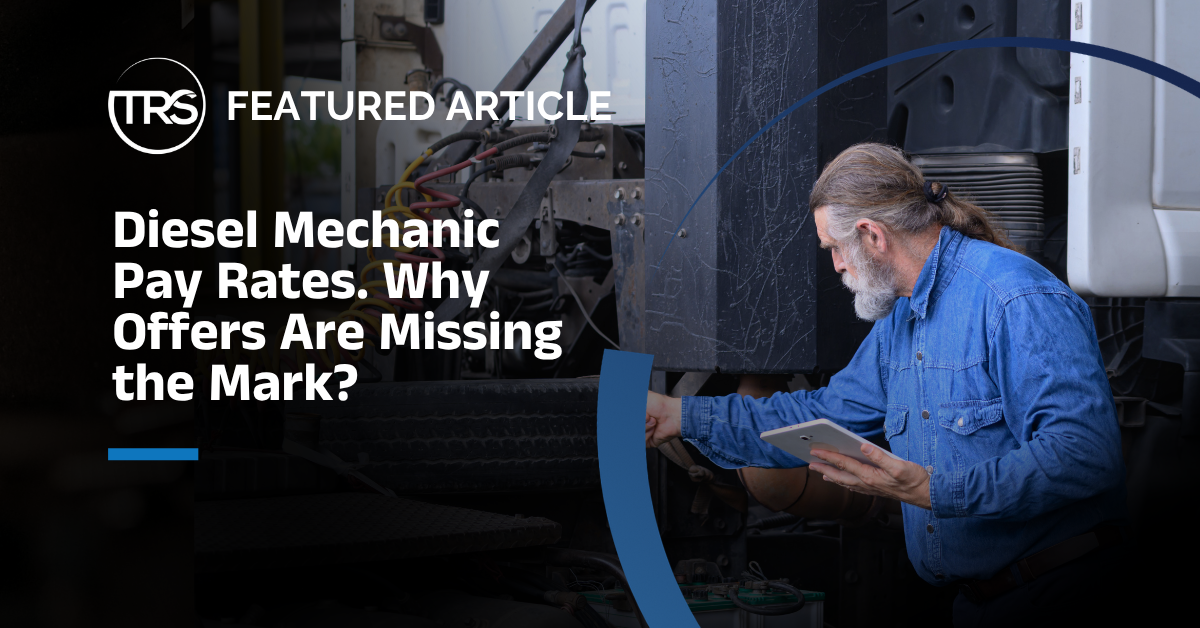
Diesel mechanic pay rates in Australia have moved, and many employer offers haven’t kept up. At TRS Resourcing, we’re regularly seeing businesses lose diesel and heavy vehicle mechanics at the offer stage because the base rate on the table reflects the market from two years ago, one year ago, or in some cases only six months ago. Candidates are holding multiple offers, and the stronger base rate usually wins.
Our Heavy Diesel and Automotive Specialist, Trent Couacaud, and Managing Director, Tavis Shearer, spoke about this in a recent video update. Trent is working across a large volume of diesel mechanic roles right now, and the gap between what some employers are offering and what candidates can get elsewhere is one of the main reasons roles are staying open longer than they should.
For hiring managers in transport, mining, logistics, workshops and dealerships, that gap has a cost. A vacant role means lost workshop hours, more overtime for the existing team, and jobs pushed back.
Are diesel mechanic pay rates going up?
Yes. The candidates applying to us are a mix of mechanics chasing the next step in their career and mechanics who simply want a better place to work. Across both groups, base pay expectations have lifted.
Some transport companies are paying well and filling roles as a result. Others are still offering rates set in a different market. We understand budgets are finite and there’s only so much in the pot. The problem is that pay bands set 12 or 24 months ago don’t hold up when a candidate has a stronger offer sitting beside yours.
The shortage data supports what we’re seeing on the desk. Diesel mechanics were included on the federal Core Skills Occupation List in December 2024, alongside motor mechanics and automotive electricians, which recognises how hard these roles are to fill. Research from AUSMASA in May 2026 also pointed to high outflow rates for diesel motor mechanics, describing a mobile workforce that moves when better opportunities appear elsewhere.
Diesel mechanic hourly rate in Melbourne and where technical blue collar pay is heading
Why are mechanics turning down job offers?
Because many of them have more than one. We’re seeing diesel and heavy vehicle mechanics receive several offers at once, not only through TRS but from other employers and agencies. When two roles look similar on paper, base pay is usually the deciding factor.
Mechanics know the market is short, and many have heard from mates in other workshops what rates are on offer. They’ll compare your base with the one they were offered last week, and if yours is lower, the conversation tends to end there.
What a declined offer costs
A declined offer resets the search. The shortlist has often moved on by then, interviews start again, and the workshop carries the vacancy for another few weeks. In a candidate-short market, a slightly higher offer made promptly is usually cheaper than a lower offer that gets turned down.
Speed matters as much as the number
Candidates with multiple offers don’t wait. If your approval process takes a week to sign off an offer, the candidate may have accepted elsewhere by the time it lands. The businesses filling roles quickly tend to have the rate agreed before the final interview.
Why diesel mechanic pay rates are unlikely to drop
Cost of living is the obvious pressure. Fuel is a daily conversation in our office, to the point we keep an eye on Brent crude each morning to get a sense of where fuel prices are heading over the next few weeks. Candidates feel those costs at the bowser and in the weekly shop, and their pay expectations follow.
Tavis describes the current period as a cycle reset, where costs across the market are being recalibrated and aren’t likely to return to where they were. Two longer-term factors support that view:
- New mines. New mining operations coming online add demand for diesel and heavy vehicle mechanics, particularly in Western Australia.
- Major projects. Australia’s defence build, including shipbuilding and personnel carriers, draws on the same pool of technical tradespeople that transport and mining businesses rely on.
The practical takeaway is that competition for this workforce is likely to hold or increase over the next few years.
What to do when a recruiter says your rate isn’t competitive
We’re direct with clients when an offer sits below the market. That feedback isn’t a criticism of the business. Our team speaks with candidates and employers across trades and services and automotive dealerships every week, so we see what mechanics are being offered elsewhere. Flagging a gap early is the fastest way to get the right person into the role.
Employers who treat that information as market data, rather than a sales pitch, tend to fill roles faster and hold onto the people they hire.
How to attract diesel mechanics in a tight market
- Review base rates for diesel and heavy vehicle roles against what candidates are being offered now, not what the role paid last time it was filled.
- Ask your recruiter what competing offers look like before you finalise your own.
- Agree the rate before the final interview so you can make an offer the same day.
- Weigh the cost of a vacant role (lost hours, overtime, delayed jobs) against the cost of a higher base rate.
- Review rates for your existing mechanics too. A mobile workforce means your current team is getting calls as well.
- Plan for the long term. Mining and major project demand will keep pressure on this workforce for years.
Diesel mechanic pay rates in Melbourne and the technical blue collar upswing
Frequently Asked Questions
Are diesel mechanic pay rates rising in Australia?
Yes. TRS Resourcing is seeing base pay expectations for diesel and heavy vehicle mechanics rise, driven by cost of living, fuel prices and demand from mining and major projects. Offers based on rates from six to 24 months ago are regularly being declined.
Why are diesel mechanics turning down job offers?
Many candidates are holding more than one offer at the same time. When roles are otherwise similar, the offer with the stronger base rate usually wins. Slow approvals can also lose a candidate even when the rate is competitive.
Will pay rates for diesel mechanics come back down?
We don’t expect a drop in the near term. New mines and major projects are adding demand for the same skills, and diesel mechanics remain on the Core Skills Occupation List.
How do I know if my diesel mechanic offer is competitive?
Speak with a specialist recruiter who’s placing diesel mechanics every week. They can tell you what candidates are being offered in your state and where your rate sits against it.
Diesel mechanic pay rates and the road ahead
There’s optimism in the market, but businesses aren’t out of the woods yet. The employers filling diesel mechanic roles quickly are the ones who have accepted that pay rates have reset and adjusted early.
At TRS Resourcing, we recruit diesel and heavy vehicle mechanics in Western Australia and technical blue-collar staff across Victoria, New South Wales and Queensland. To find out how TRS Resourcing can support your hiring needs, submit a vacancy or get in touch with our team today.
If you have any questions, please get in touch with us via this form
