Heavy Diesel Mechanics The Technical Blue Collar Trade
When businesses come to me looking for a heavy diesel mechanic, the conversation usually starts the same way. They need someone experienced, they need them soon, and they’re frustrated because the last few attempts to fill the role haven’t worked out. What I’ve noticed over time is that the frustration often comes from a gap…

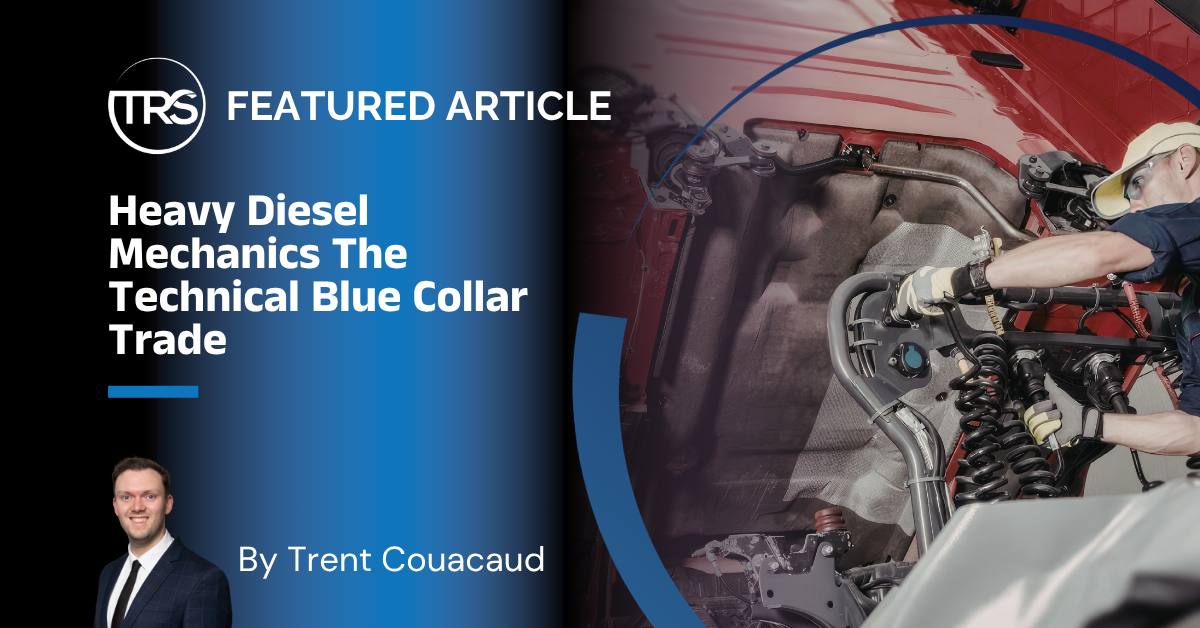
When businesses come to me looking for a heavy diesel mechanic, the conversation usually starts the same way. They need someone experienced, they need them soon, and they’re frustrated because the last few attempts to fill the role haven’t worked out. What I’ve noticed over time is that the frustration often comes from a gap between what employers think they’re hiring and what the role demands. So, understanding that gap is the first step to closing it.
Heavy diesel mechanics are not generalist trades. They are not interchangeable with light vehicle mechanics, and they are not a role you can fill by casting a wide net and hoping for the best. They sit firmly in the technical blue collar category for a reason and that reason matters enormously when it comes to how you recruit, what you offer, and how long your hires actually last.
What a Heavy Diesel Mechanic Does
The scope of a heavy diesel mechanic’s work goes well beyond servicing engines. On any given day, a qualified mechanic in this space might be diagnosing fault codes using electronic diagnostic software, stripping and rebuilding a transmission, working through a hydraulic failure on a piece of civil plant, or inspecting air brake systems on a prime mover that needs to be back on the road by morning. The equipment they work on, prime movers, semi-trailers, excavators, dump trucks, cranes, generators; represents significant capital investment for the businesses that own it. Downtime is expensive. Errors are more expensive still.
The systems these mechanics work across are rather complex. Air brakes, hydraulics, pneumatics, emissions control, electronic fault diagnosis, drivetrain and suspension, a heavy diesel mechanic needs working knowledge across all of it. They need to be comfortable reading technical manuals and service bulletins, completing compliance documentation, and making sound judgement calls when they’re working alone on a remote site or responding to a field service callout with limited support around them.
This is why the Certificate III in Heavy Commercial Vehicle Mechanical Technology is only the starting point. The qualification takes four years to complete. The practical capability that makes someone valuable in this trade takes a lot longer to develop and it’s that experience gap that forces the hand of most of the hiring difficulty I see across Melbourne and Sydney.
What Should a Senior Heavy Vehicle Mechanic Look for in Their Next Role
The Systems Behind the Role
One of the things that separates heavy diesel mechanics from other trades is the breadth of systems they’re expected to understand and work across simultaneously. Hydraulic systems alone, the kind found on heavy haulage equipment, crane vehicles, and civil plant, require a mechanic who can diagnose pressure faults, replace and repair hose assemblies, and identify failure points in systems that, if they go wrong, create serious safety and compliance exposure for the business.
Add electronic diagnostics into the mix, and the technical demand increases again. Modern heavy diesel engines are managed by sophisticated engine management systems. Reading and interpreting fault data, understanding what the data actually means in the context of the physical equipment, and knowing when a software reset is the answer versus when there’s a deeper mechanical issue underneath, that’s a skill set that develops through years of hands-on exposure, not through a job ad and a four-week induction.
Businesses operating in trades and services and logistics and supply chain feel this acutely. Fleet maintenance schedules, compliance requirements, and the operational cost of downtime all depend on having mechanics who genuinely know what they’re doing across these systems not candidates who are still developing that knowledge on your equipment, on your time.
Why the Recruitment Market Is So Tight
Workshops I work with tell me the same thing all the ime: they can find candidates, but they can’t find the right candidates. The heavy diesel mechanic market in Australia is not empty. There are qualified people out there. But the ones with genuine depth of experience the mechanics who can walk into a complex workshop environment, read a situation quickly, and operate with minimal supervision from day one, are almost all employed. And they’re not actively looking.
The ageing workforce compounds this. A meaningful proportion of the most experienced heavy diesel mechanics in Melbourne and Sydney are in their late forties and fifties. Retirements are coming, and the apprenticeship pipeline is not producing qualified replacements at the rate the industry needs. Infrastructure investment, freight growth, and the continued expansion of construction and civil activity across Australia are all pushing demand upward at exactly the same time supply is tightening.
What I also see is a geographic mismatch. Some of the best heavy diesel mechanics are working regionally, tied to mining or agriculture operations, or simply not in metropolitan areas where workshop-based employers are looking. Reaching those candidates requires relationships and industry knowledge that a job board listing alone will never provide.
What Employers Need to Do Differently
The businesses that consistently secure strong heavy diesel mechanics are not the ones with the most aggressive job ads. They’re the ones who treat this as a specialist recruitment exercise from the start. They’re clear about what the role involves the equipment, the systems, the hours, the site conditions. They’re realistic about timelines. And they move quickly when a strong candidate is identified, because in this market, hesitation costs you the placement.
Pay and conditions matter more than many employers want to acknowledge. A qualified heavy diesel mechanic with ten years of experience on prime movers and civil plant has options. If the rate doesn’t reflect the technical complexity of the role, or if the workshop environment doesn’t meet a reasonable standard, the best candidates will look elsewhere. That’s not negotiation tactics that’s just the reality of a tight technical blue collar market in 2026.
Early engagement also makes a significant difference. Waiting until a vacancy is urgent before starting the recruitment process puts you behind from the beginning. The employers who build relationships with specialist recruiters before they desperately need them are the ones who get first access to candidates when the right person becomes available.
How TRS Approaches This
In the technical blue collar space, heavy diesel mechanics are one of the roles I focus on most consistently at TRS Resourcing. My approach is built on industry knowledge first, so understanding the equipment, the environments, and the operational pressures that employers are working within and matching that with insight into what experienced mechanics are looking for in a role.
I don’t put forward candidates who don’t fit. I’d rather have a direct conversation about what’s realistic in the current market than waste a client’s time with mismatched shortlists. If you’re a Melbourne or Sydney business looking for qualified heavy diesel mechanics, I’d welcome that conversation. Get in touch or submit your vacancy and I’ll be in touch shortly.
If you have any questions, please get in touch with us via this form
