What Does a Field Service Diesel Mechanic Do All Day?
You’ve spent your career in a workshop, field service can sound like the dream. No foreman standing over your shoulder. No production line of the same engine coming through the bay. Just you, a service truck, and the job in front of you. The reality is close to that but there’s more to it than…

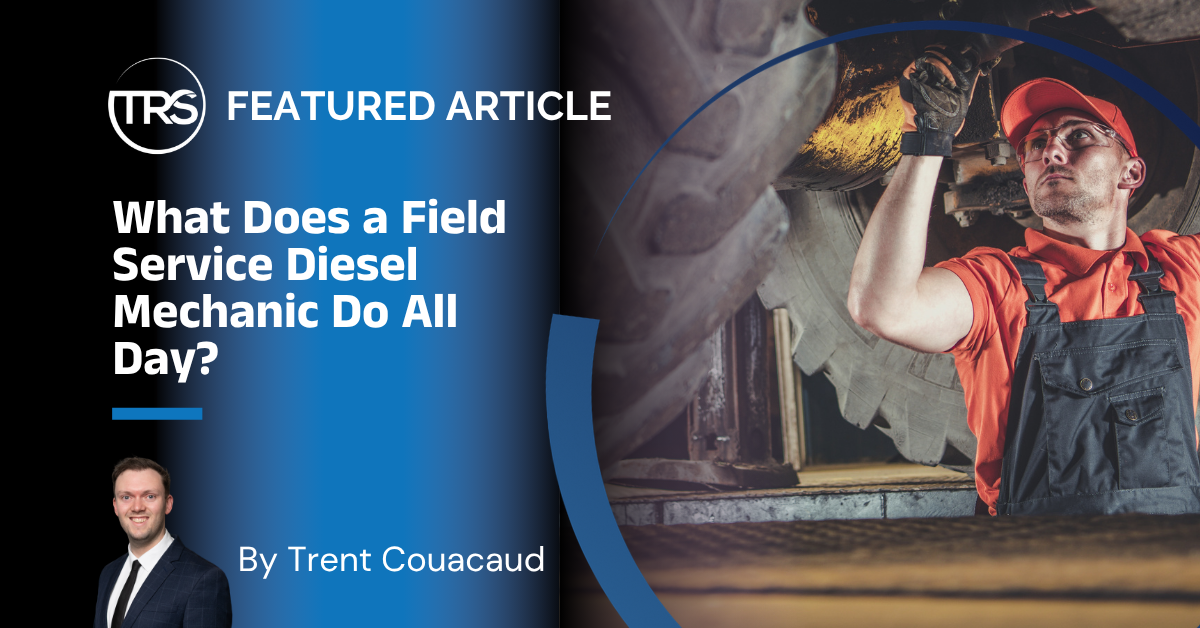
You’ve spent your career in a workshop, field service can sound like the dream. No foreman standing over your shoulder. No production line of the same engine coming through the bay. Just you, a service truck, and the job in front of you.
The reality is close to that but there’s more to it than freedom and fresh air. Field service diesel mechanics carry a different kind of responsibility to their workshop counterparts, and the role suits a specific type of tradesperson. If you’re a qualified diesel mechanic who’s been curious about making the move, here’s what the work looks like day to day.
The Core of the Role
A field service diesel mechanic travels to wherever the equipment is, a mine site, a construction project, a transport depot, a quarry, or a remote worksite and carries out repairs, scheduled servicing, and diagnostics on location. The equipment doesn’t come to you. You go to it.
That means your workshop is your service vehicle. Everything you need for the day tools, parts, fluids, diagnostic equipment, safety gear has to be with you or accessible through a parts runner or depot. Good field technicians are methodical about their truck. Running out to a breakdown two hours from the nearest town without the right parts isn’t just inconvenient; it’s a serious operational problem for the client.
The work itself covers the full range of diesel mechanical trade tasks: engine diagnostics and repairs, hydraulic system servicing, electrical fault-finding, drivetrain work, scheduled preventive maintenance, and component replacement. On complex plant and mining equipment, you’re also working with onboard diagnostic systems and OEM software Cat ET, Komatsu KOMTRAX, and similar platforms depending on the fleet you’re servicing.
FIFO vs. DIDO Drive In Drive Out: What’s the Difference?
Field service roles broadly fall into two categories, and understanding the difference matters before you commit to either.
FIFO: fly in fly out, is common in remote mining and resources operations, particularly in Western Australia and Queensland. You’ll fly to site at the start of your roster, work a set swing (commonly two weeks on, one week off, or four weeks on, one week off depending on the operation), and fly home at the end. Accommodation, meals, and transport are covered by the employer. The pay reflects the conditions, and for many mechanics, the income to lifestyle trade off works well particularly if you’re disciplined about what you do with your time off.
Drive in drive out (DIDO) roles are more common in regional operations, infrastructure projects, and metropolitan-adjacent worksites. You drive to your assigned location each day or stay locally during the week and return home on weekends. It’s less disruptive than FIFO but can still involve early starts, long days, and significant time on the road depending on the geography.
There’s also a third category worth knowing about: metropolitan field service. These roles keep you within the city or surrounding region, responding to breakdowns and carrying out scheduled servicing for transport companies, local councils, construction contractors, and equipment hire businesses. The pay is lower than remote site work, but you’re home every night and the role still offers the autonomy that draws people to field service in the first place. If you’re exploring trades and services opportunities in Melbourne or Sydney, metropolitan field service is worth considering seriously.
A Typical Day in the Field
There’s no single version of a typical day, which is part of the appeal. But here’s what many field service diesel mechanics experience across a standard shift.
The day usually starts with a pre-start check on the service vehicle, reviewing the job schedule or work orders for the day, and confirming parts availability. If you’re on a mine site, there’ll be a toolbox talk or site safety briefing before anyone moves. Safety documentation is a constant JSAs, permits to work, equipment sign-offs. Experienced field technicians treat the paperwork as part of the job, not an add-on to it.
From there, it’s onto the work orders. That might mean a scheduled service on a fleet of haul trucks, a hydraulic fault on an excavator that’s holding up a dig, or a breakdown diagnosis on a prime mover that’s gone down at a freight depot. You assess, you diagnose, you repair, and you document. Most employers now require detailed digital job records, parts used, time spent, fault codes, work completed, and llow-up recommendations.
The pace is self-managed. You don’t have a workshop supervisor checking your bay every hour. You’re expected to manage your own time, communicate proactively when jobs take longer than expected, and flag issues before they become problems. That autonomy is what field service mechanics value most but it’s also what catches out tradespeople who aren’t ready for it.
Diesel mechanic pay rates in Melbourne and the technical blue collar upswing
The Tools and Tech Side
Field service has become significantly more technical over the past decade. Modern heavy diesel equipment is monitored continuously through telematics systems, and fault codes are often flagged before a machine goes down. As a field technician, you’re expected to interpret that data, not just respond to it.
On top of your standard hand tools and specialised diesel mechanical equipment, you’ll typically work with laptop-based diagnostic software, digital multimeters, hydraulic pressure test kits, and sometimes specialised OEM tools specific to the equipment brands you’re servicing. Mechanics who invest time in understanding the diagnostic side of the role tend to advance faster and attract better opportunities.
What Employers Are Looking For
A trade certificate is the baseline. What separates candidates who land field service roles from those who don’t is usually a combination of diagnostic confidence, communication skills, and what experienced recruiters often call a “site-ready mindset.”
Employers want field technicians who can work independently without constant direction, communicate clearly with site managers and clients when issues arise, and manage their vehicle and parts inventory without being prompted. Strong safety awareness isn’t optional on most sites, a single safety breach ends the engagement immediately.
If you’ve spent your career in a structured workshop environment, the transition is absolutely achievable but it helps to be honest with yourself about whether the independence and accountability of field service suits how you work best.
Is Field Service the Right Move for You?
Field service suits diesel mechanics who are self-motivated, comfortable with variety, and ready to own their day rather than be directed through it. If that sounds like you, it’s one of the stronger career moves available in the trades right now the demand is there, the pay is competitive, and the work keeps you sharp across a broad range of equipment and situations.
If you’re a qualified diesel mechanic considering a move into field service in Melbourne, Sydney, or even Queensland, the TRS Resourcing team works with employers across transport, plant, and mining sectors who are actively looking for the right people. Upload your CV or get in touch and we’ll have a straightforward conversation about what’s available and whether it’s the right fit.
If you have any questions, please get in touch with us via this form
