Where Can I Find Skilled Boilermakers, Welders and Fabricators?
If you’re running a fabrication workshop or a heavy vehicle build shop, you probably know the answer to this question isn’t “post the ad and wait.” Trade qualified boilermakers, aluminium welders and mechanical fitters are some of the hardest people to find in Australia, the shops that need them tend to be the ones with…

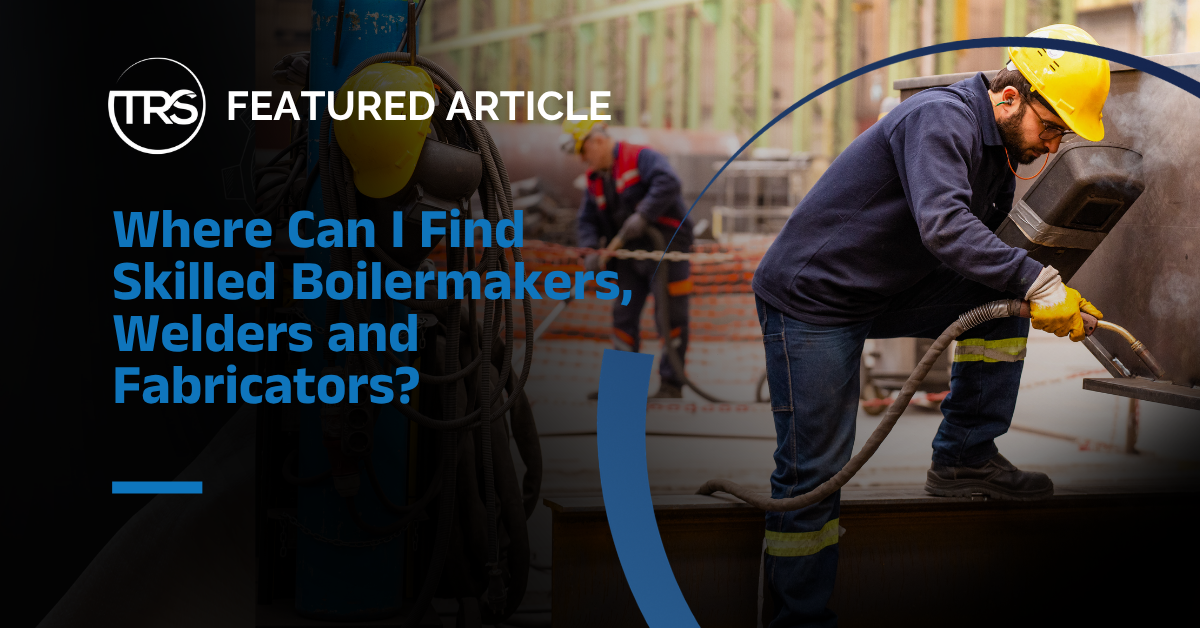
If you’re running a fabrication workshop or a heavy vehicle build shop, you probably know the answer to this question isn’t “post the ad and wait.” Trade qualified boilermakers, aluminium welders and mechanical fitters are some of the hardest people to find in Australia, the shops that need them tend to be the ones with the least spare time to go looking.
Here is our honest version of where these people have come from, and why the usual channels keep coming up short.
Why skilled fabricators are proving hard to find right now
The shortage isn’t a rumour, we’re not putting enough apprentices through the trades to replace the ones leaving the trade. Boilermaking, welding and fitting all take years to get right, so you can’t hire your way out of a gap overnight. The people with the tickets and the hands on experience are working, usually somewhere they are reasonably happy.
This does change how you have to hire however. These day’s you’re rarely picking from a pile of active jobseekers, yet you’re convincing someone who already has a job to move over to yours. Most job ads are not built for that, which is why so many of them sit there collecting the wrong applicants.
What “skilled” means for these roles
Half the problem is that “welder” or “fitter” covers a lot of ground, and a mismatch costs you money. A few distinctions worth being clear on before you go to market:
Boilermakers and fabricators are not interchangeable, even though the words get used loosely. You want someone who can read a drawing, set out the job, and weld to standard on the material you run, whether that is structural steel or aluminium.
Aluminium welders are a specialism in their own right. If you are building truck trays, trailers or tankers, aluminium experience is not a nice to have. Someone who is excellent on steel can still struggle on alloy, and you find that out the expensive way.
Mechanical fitters vary hugely depending on whether the work is new build, installation, or shutdown. A fitter who thrives on bunded fuel tank installs is not automatically the fitter you want on a maintenance shutdown.
Plant and heavy vehicle mechanics need to be matched to the equipment. Crushing circuits, mobile plant, trailers and axles all pull on different experience.
Getting this right at the screening stage is part of the battle. Getting it wrong is how you end up rehiring in three months.
Where employers are finding them
There are really only a handful of channels, and each has a catch.
The big job boards will get you volume, but volume is the problem, not the solution. You’ll spend hours filtering applicants who don’t hold the ticket, have the right to work, or haven’t touched the material you build in. For a specialist trade, reach is not the same as fit.
Referrals from your existing tradespeople are gold, and you should always ask. The limit is obvious: your best welder only knows so many other good welders, and they are usually already employed too.
Specialist recruiters who work these trades are where the hidden market lives. The people you most want are not scrolling job boards. They are heads down on the tools, open to the right move but not actively looking.
The difference between a generalist agency and a specialist one is who they already know before you call.
The Melbourne’s west factor
If your workshop is in Melbourne’s western and outer suburbs, you’re hiring in the middle of the country’s densest concentration of fabrication, heavy vehicle and fuel equipment work. Truganina, the western industrial belt and the surrounding corridors are full of shops competing for the same tradespeople. That is good news and bad news. The talent is nearby, but so is every other employer chasing it, which means pay, conditions and how quickly you move all matter more than they would in a quieter market.
Speed is underrated here. A good fabricator who decides to move will have options within a week. If your process takes three, you have already lost them.
How TRS sources and screens for these roles
We are a specialist technical blue collar agency, which means these are the trades we work every day, not occasionally. That has a few practical consequences for you.
We already know a lot of these people. Boilermakers, aluminium welders, fitters and heavy vehicle mechanics across Melbourne, Sydney and Queensland are in our network before you have a vacancy, which is how we reach the ones who are not applying anywhere.
We screen for the trade, not just the title. That means confirming the ticket, the material experience, and the right kind of build or maintenance background before anyone gets to your door. It also means we handle the compliance side properly, including right to work RTW verification, so you are covered against your Labour Hire Authority obligations without having to think about it.
And we move at workshop speed, because we understand that a build slot sitting empty is costing you money now, not next month.
The short answer
Where do you find skilled boilermakers, welders and fabricators? Almost never on an open job board, and almost always through a network that already knows them. If you are building trailers, tankers, fuel equipment or structural steel out of Melbourne’s west and you need trade qualified people who can start, that is exactly the network we have spent years building.
Tell us what you are building and what tickets the job needs, and we will tell you who we know.
If you have any questions, please get in touch with us via this form
