Heavy Vehicle Mechanics The Hardest Hire in Civil Infrastructure
Australia’s civil and industrial infrastructure sector has a fleet uptime of the single biggest driver of project delivery. When a vacuum truck goes down on a live sewer job, or a hydro excavation unit is parked waiting for a hydraulic diagnosis, the cost compounds their their crews standing around, and yet, the trade most critical…

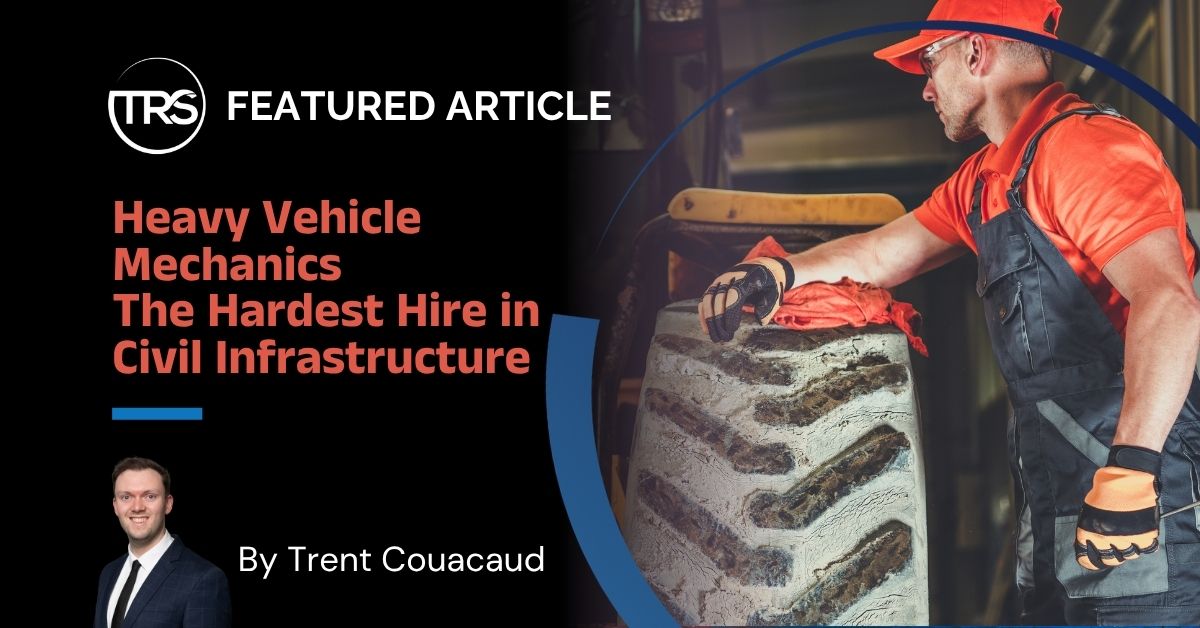
Australia’s civil and industrial infrastructure sector has a fleet uptime of the single biggest driver of project delivery. When a vacuum truck goes down on a live sewer job, or a hydro excavation unit is parked waiting for a hydraulic diagnosis, the cost compounds their their crews standing around, and yet, the trade most critical to keeping that fleet in operation, the heavy vehicle mechanic with genuine experience on vacuum trucks, jetting units, and civil plant, is one of the hardest roles to fill in the country. Can you believe that? I can.
This is why TRS works with infrastructure services providers in Melbourne and Sydney. The same pattern emerges with almost every brief as well: employers want someone who can step into their workshop, diagnose a fault on a non destructive digging unit by lunchtime, and have the truck back on a job site by the next morning. That candidate does exist, but they’re not on Seek scrolling through ads that’s for sure!
Timely with our current position advertised: https://www.trsresourcing.com/jobview/heavy-vehicle-mechanic-civil-equipment-fitter/d2293e30-f208-450e-ab36-f829e3123b8c/
This article looks at:
- what’s behind the shortage of specialist heavy vehicle mechanics
- what separates a generic diesel fitter from one who can service a modern vacuum and jetting fleet
- and how employers in civil infrastructure can position themselves to attract the right person.
The Skills Gap Is Specific, Not General
There is no shortage of qualified heavy vehicle mechanics in Australia. The shortage are the mechanics who have experience with the equipment that keeps modern civil infrastructure operating.
That includes:
- Vacuum trucks used for non destructive digging and hydro excavation
- High pressure water jetting units, including long range and combination loaders
- Heavy rigid and combination trucks running on live operational sites
- Excavators, pumps, and associated civil plant
- Hydraulic, mechanical, and integrated fluid systems
Mechanics who have spent 10+ years servicing road transport prime movers can transition into this work, but the learning of a hydro excavation unit is something else. The vacuum systems, blower configurations, water pressure systems, and the way faults present in the field are different from a long-haul truck. Employers who hire on trade qualification alone, without screening for direct fleet experience, end up either retraining for 6 or replacing them.
Why the Best Mechanics Aren’t Applying to Job Ads
The strongest candidates in this space are already employed. They have stable workshops, modern fleets, and consistent work. They’re not refreshing seek job boards.
When TRS Resourcing approaches a passive candidate for a specialist heavy vehicle mechanic role, the conversation doesn’t start with money. It starts with three questions:
- What’s the fleet like, and how well is it maintained?
- How much autonomy will I have in the workshop?
- Is the work varied, or am I servicing the same six trucks on rotation?
Employers who can answer those questions with confidence a modern, well-specified fleet, technical autonomy, and variety with vacuum, jetting, and civil plant convert candidates.
You’re A Truck Dealership and You Can’t Find Heavy Diesel Mechanics
Autonomy Is the Differentiator
In the civil infrastructure sector, the most experienced heavy vehicle mechanics are not looking for supervision. They’re looking for ownership.
A senior mechanic with three or more years post trade experience on vacuum trucks and jetting systems has already proven they can fault find independently. They want freedom from their next employer to manage their own work, make calls on repairs without being second guessed, and contribute to how the workshop runs.
This is where employers in the industry lose. A workshop culture built around clocking in, ticking job cards, and waiting for instruction is a turn off for senior trades. The infrastructure providers TRS Resourcing partners with who retain mechanics long-term tend to share a few characteristics: clear scope, technical trust, and a reasonable balance between scheduled servicing and breakdown response.
What Employers Should Be Screening For
Trade qualification is the baseline. Beyond that, hiring managers in civil infrastructure should be testing for:
- Direct fleet experience on vacuum trucks, NDD units, or jetting equipment, not just general heavy vehicle work
- Diagnostic confidence across hydraulic, mechanical, and fluid systems
- Field repair capability, not just workshop work
- Compliance literacy, including inspection and reporting requirements
- HR licence, which while often listed as desirable, materially expands what the mechanic can do across a job
A mechanic who can move a truck on and off site, run a compliance inspection, and hand back a unit ready for live sewer work is significantly more valuable than one confined to the workshop.
Practical Takeaways for Employers
For infrastructure services providers actively hiring or planning to hire in this space, a few practical points:
- Lead the brief with the fleet, not the salary. Specialist mechanics want to know the equipment is worth their time
- Be specific about scope. Vague job ads attract vague applicants
- Resist the urge to hire a generalist and hope for the best. The retraining cost is higher than the wait
- Treat the recruitment process as a conversation, not a screening funnel. Senior trades expect to be engaged with, not processed
- If using a recruitment partner, brief them on the equipment specifics. A recruiter who understands the difference between a vacuum truck and a tipper will save weeks
Working with a Specialist Recruitment Partner
TRS Resourcing partners with infrastructure services businesses in Australia to fill the technical trades roles that don’t move easily through standard channels. The firm operates with transparency on every brief, maintains direct relationships with experienced mechanics in the civil and industrial sectors, and only advertises roles that are genuinely active.
For employers, getting the recruitment right the first time is the best path forward.
TRS Resourcing connects civil infrastructure providers with skilled heavy vehicle mechanics. To discuss a current or upcoming hire, contact Trent.
What Should a Senior Heavy Vehicle Mechanic Look for in Their Next Role
If you have any questions, please get in touch with us via this form
